Client case study · Niche luxury fragrance
$72K in ad spend → $261K in revenue.
How a niche luxury fragrance house went from a declining, single-channel account to a 3.63 MER growth engine in seven months.

A cult following. An account quietly going backwards.
A niche luxury fragrance house founded by a visual artist, with a devoted cult following, recurring editorial coverage, and real prestige equity. Spend was rising, efficiency was falling, and almost every dollar flowed through a single platform.
A limited and stalling revenue base.
Online revenue averaged roughly $4,440 per week on about 33 orders, with no clear path to scale.
A single-channel strategy.
Paid media ran almost entirely on Meta. Google represented effectively 0% of spend — no diversification, no lower-funnel demand capture.
Falling efficiency.
Weekly MER slid from 3.13 to 1.66 as the account was pushed without structural support. New-customer acquisition cost had climbed to about $73.
Soft conversion and thin daily volume.
Site conversion hovered around 1.5% and dipped below 1% in several weeks.
Under-optimised account structures.
Campaign architecture and measurement were not set up to scale spend without inflating cost, and the two platforms were never measured as one system.
Sound familiar? Every one of these is fixable. Here’s what we changed.
Book a Strategy Call →Two channels, measured as one system.
We rebuilt the foundation instead of pushing spend harder: a funnel where every campaign has a defined job, Google built into a real second channel, and one blended measure of success.
Restructured the funnel and account architecture
Spend could now scale without efficiency falling apart, with prospecting, retargeting, and demand capture each doing a defined job.
Expanded Google beyond brand search
Google was built from essentially zero into a real acquisition channel — about 24% of total spend — capturing high-intent demand the brand had been leaving on the table.
Integrated Meta and Google as one system
Both are managed together against blended MER and contribution, so each channel plays to its strength instead of being judged on last-click numbers.
Continuous conversion rate optimisation
Focus stayed on the experiences customers actually landed on, lifting the rate at which existing traffic turned into orders.
BFCM week alone
$32,135 at a
10.18 MER.
Nearly triple the same week a year earlier, on comparable spend.
Profitable growth that held after the holiday.
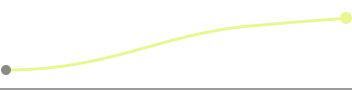
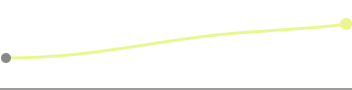
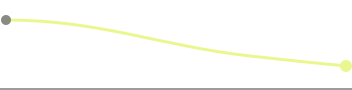
Seven months in, the account produces $261,061 in revenue on $72,003 of media at a 3.63 MER, with new-customer CAC down 30% and Google doing real work at 24% of spend. The most recent eight weeks averaged $8,723 weekly revenue at a 3.60 MER.
This brand did not grow because of a clever hack or simply spending more. It grew because we fixed the foundation.
Healthier unit economics, a real second channel, an integrated measurement model, and a funnel built to convert. The result is a brand that now scales profitably and has real room to keep going.
Want results like these for your brand?
Book a free 30-minute strategy call. We’ll show you exactly where your ad spend is leaking and what we’d do about it.